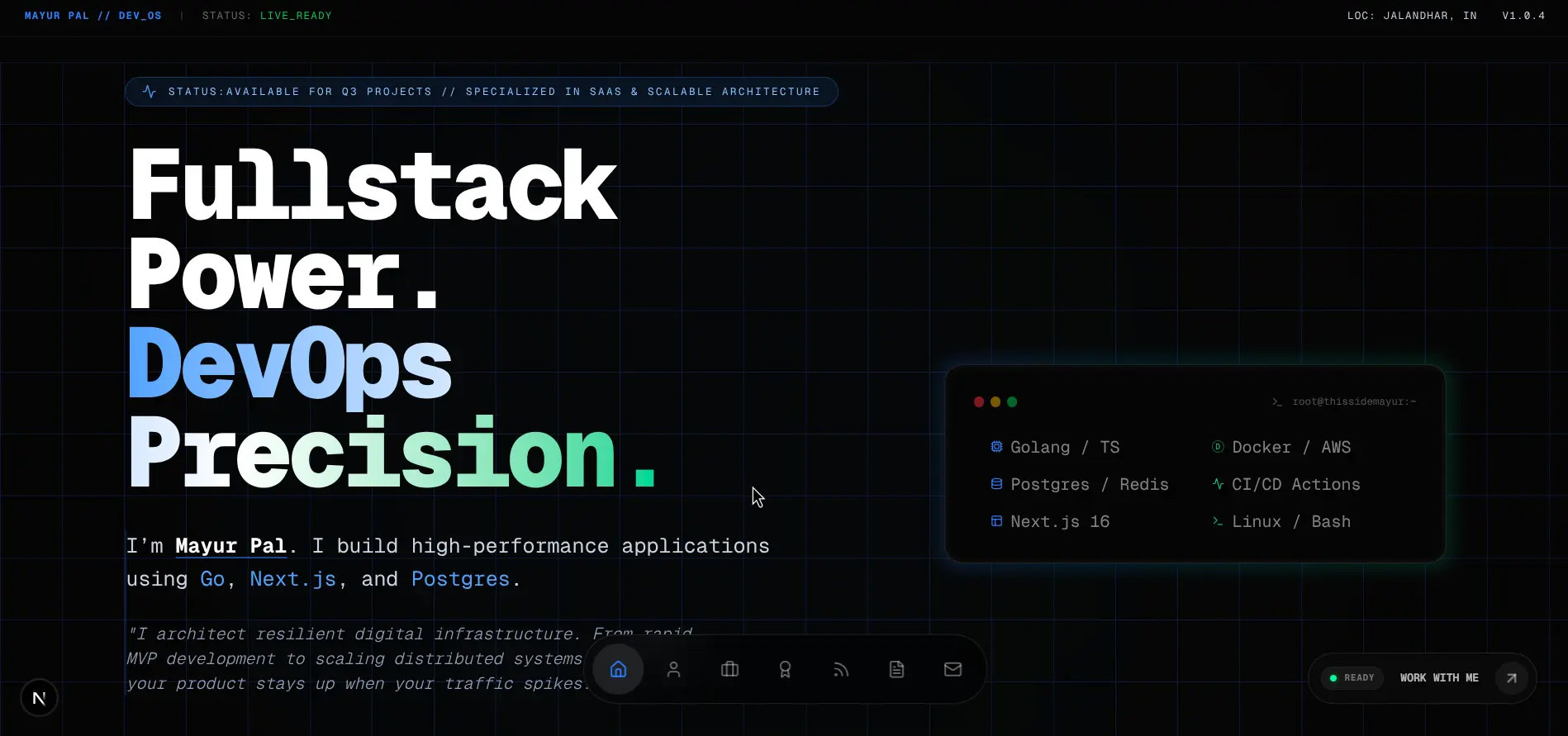
Technical Case Study
🚀 Engineering a High-Performance Portfolio System
Stack: Next.js · SSR · Lighthouse 100
The Challenge
Traditional React portfolios suffer from bloated JavaScript bundles, leading to high Total Blocking Time (TBT) and poor Largest Contentful Paint (LCP). For a Systems Engineer, a slow site is a bad résumé. This project was built to prove that a feature-rich CMS can still achieve sub-second performance.
🛠 Architectural Strategy
1. Performance Profiling & Main-Thread Optimization
Using the Chrome DevTools Performance Tab, I identified "Evaluate Script" tasks as the primary cause of high TBT.
- Solution: Implemented Dynamic Routing and selective Component Hydration.
- Result: Reduced initial JavaScript payload by 40%, moving heavy interactive elements off the critical rendering path.
2. Edge-Computing & Security with jose
To avoid the latency of traditional session databases, I implemented Edge Authentication.
- Stateless Auth:
josefor JWT verification directly inside Next.js Middleware — no database round-trip on every request. - Secure Protocols: Admin access governed by HTTP-only secure cookies, verified at the network edge. Unauthorized requests never reach the server infrastructure.
3. SEO & Semantic Discovery
Visibility is as important as performance. This system automates the full technical SEO pipeline: